
Local SEO works best when you understand how people in your area actually search for your services. Whether you are a plumber, landscaper, HVAC company or any other service based business, the right local keywords help you show up at the exact moment people are ready to hire. This guide walks you through local keyword research in a simple, beginner friendly way so you can improve your local SEO without feeling overwhelmed.
You will learn how to conduct local keyword research, how to use keyword research tools like Ahrefs and Google Keyword Planner, how to understand search volume and search intent and how to build a keyword strategy that helps you rank higher in local search results.
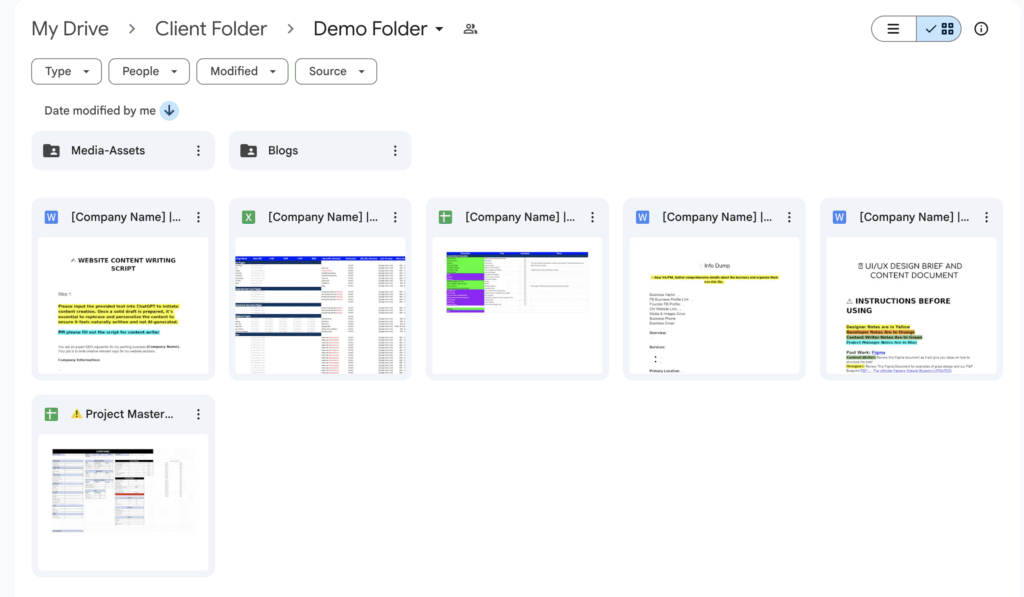
We also provide free resources that walk you through keyword research and website keyword planning step by step. You can access them here: [Resources]
This guide follows real search behavior and shows you how to find keywords your potential customers already use.
What Local Keywords Are and Why They Matter
Local keywords are search terms people type when they want to hire a nearby local business. These search terms tell search engines where you are, what you offer and what type of customers you serve.
Local keywords fall into two important types.
Explicit local keywords
These include the city, neighborhood or a specific location.
Examples:
- plumber Phoenix
- AC repair Mesa
- roof repair Denver
Implicit local keywords
These do not include a city, but search engines understand the local intent.
Examples:
- emergency plumber
- HVAC tune up
- carpet cleaning near me
Using both explicit and implicit terms helps search engines connect your site to your local area. This improves visibility in the local pack, organic search and Google Maps.
Types of Local Keywords Service Businesses Should Use
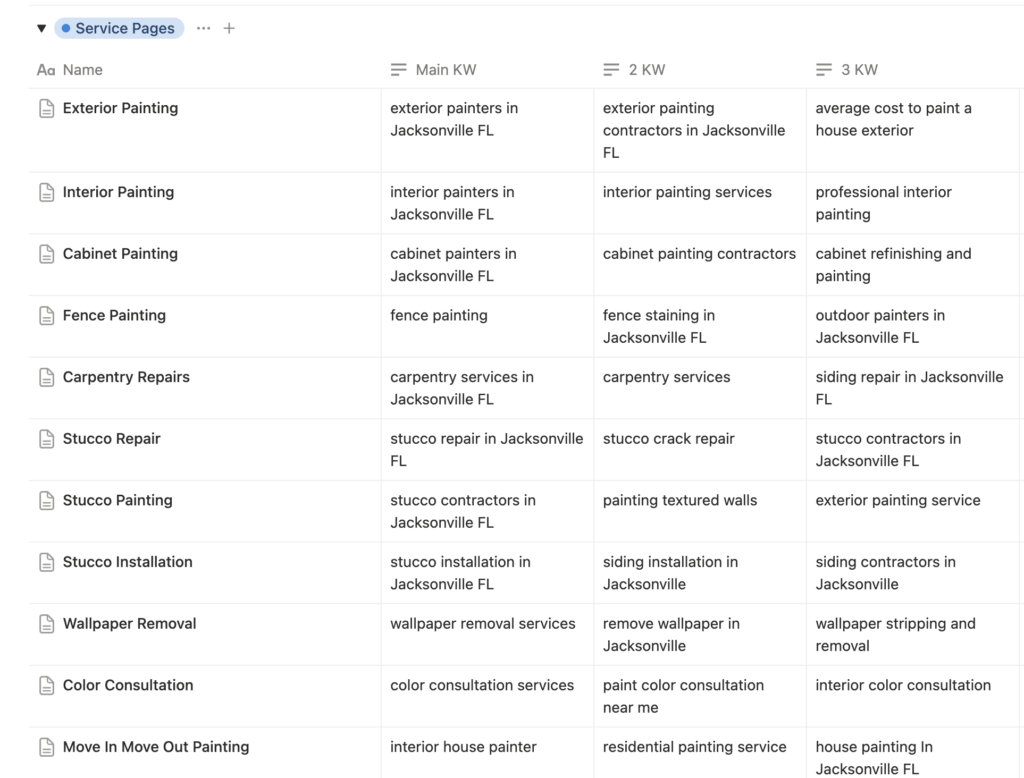
Service and City Keywords
These combine your service with your business location.
Examples:
Patterns:
- [service] + [city]
- [service] + [city] + [state]
- [service] + in + [city]
Examples (for a house painter in Denver):
- house painter Denver
- interior painting Denver CO
- exterior painters in Denver
- residential painting Denver
- commercial painting Denver
These should appear in:
- Title tags
- H1 / main headings
- Google Business Profile description
- Service pages
Neighborhood or Area Keywords
These help you show up for smaller, more specific locations.
Examples:
Patterns:
- [service] + [neighborhood]
- [service] + [suburb] + [city]
- [service] + [county]
Examples (for a landscaper in Chicago):
- landscaping Lincoln Park
- lawn care Naperville IL
- snow removal Evanston
- landscape design Cook County
These are great for:
- Individual city/neighborhood pages
- “Areas we serve” page with internal links
Near Me Keywords
These show strong search intent and convert well.
Examples:
Patterns:
- [service] near me
- [service] nearby
- best [service] near me
Examples (for a dentist):
- dentist near me
- emergency dentist near me
- family dentist nearby
- best cosmetic dentist near me
Use these:
- In a couple of blog posts / FAQs: “How to find the best plumber near me”
- On a location page: “Looking for a roofer near you in Austin?”
Local Intent Keywords Without a Location
Google understands where the person is even if the city is missing.
Examples:
Examples:
- gutter cleaning
- drywall repair
- landscaping service
- interior painting
- mold removal
A well rounded keyword strategy uses a mix of all four types so you can reach the widest range of local customers.
How to Start Your Local Keyword Research
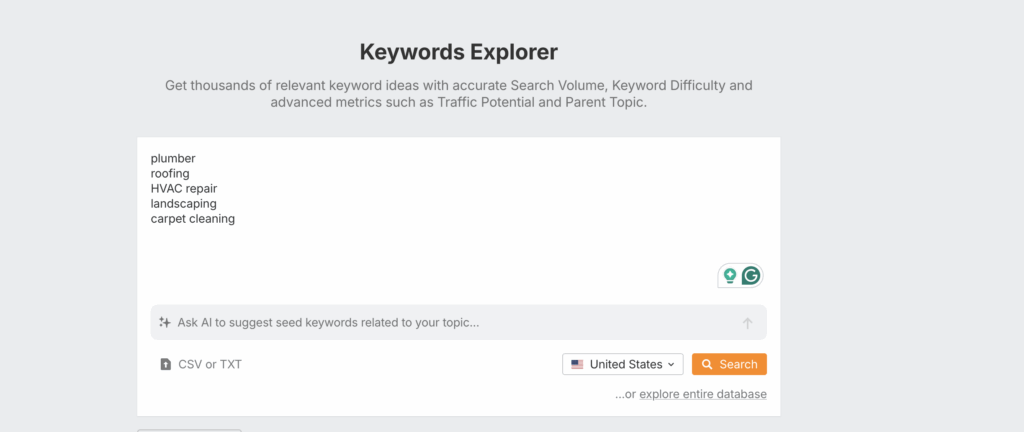
Local keyword research begins with something called seed keywords. These are simple words describing your service.
Examples:
- plumber
- roofing
- HVAC repair
- landscaping
- carpet cleaning
These seed keywords help you find relevant keywords, related keywords and location specific keywords using keyword research tools.
How to Do Local Keyword Research Using Ahrefs
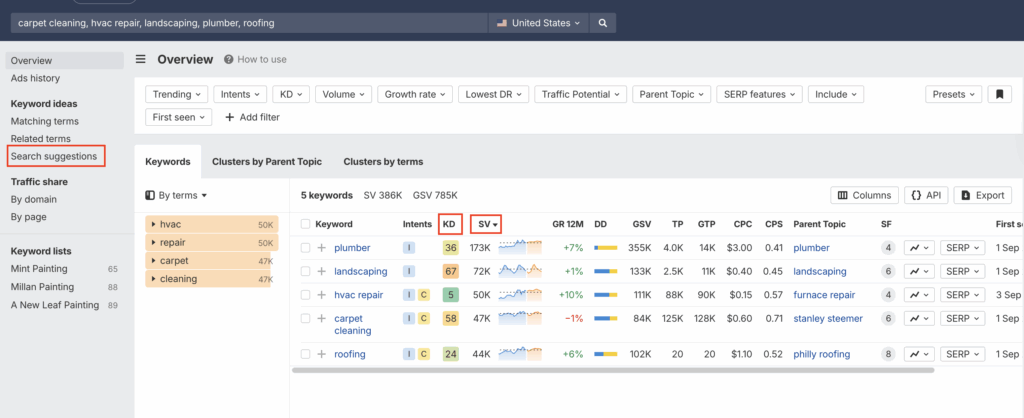
Ahrefs is one of the most complete keyword research tools for local SEO. Here is how to perform local keyword research step by step.
Enter Your Seed Keywords
Type your basic service words into Keywords Explorer.
Review Keyword Ideas
Ahrefs will show keyword ideas based on real local queries and search behavior.
Filter by Local Modifiers
Look for modifiers such as:
- near me
- your city name
- your neighborhood
- specific location names
These filters help you find explicit local keywords your customers already search.
Look at Search Volume and Keyword Difficulty
The search volume column tells you how many people search for the term.
Keyword difficulty tells you how competitive it is.
Low competition keywords help smaller businesses earn local rankings faster.
Look at Related Keywords
Ahrefs shows real related keywords that match how local customers talk.
Examples:
- best plumber near me
- AC repair open now
- emergency drain cleaning
These often show strong search intent.
Check Local Competitors
Type a competitor’s site into Site Explorer.
Look at the keywords they rank for.
This is one of the clearest ways to identify keywords you may be missing.
Ahrefs gives you details that support real local SEO performance and help you build keyword strategies that match your service area.
How to Do Local Keyword Research with Google Keyword Planner
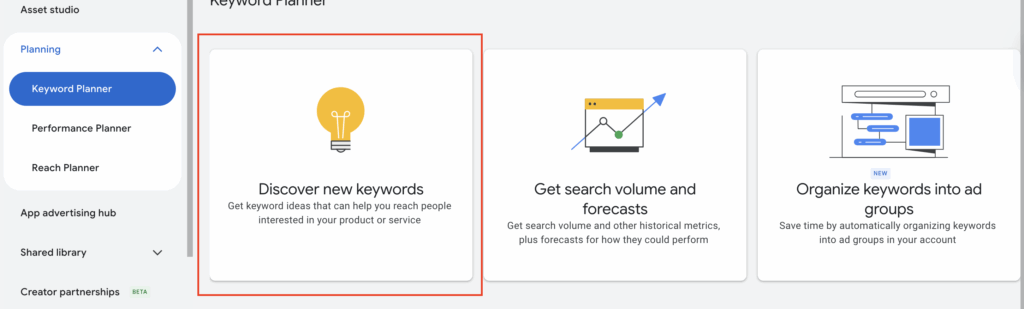
Google Keyword Planner is a free keyword research tool inside your Google Ads account. It is one of the easiest ways to find local search volume for your exact city or service area.
Open Discover New Keywords
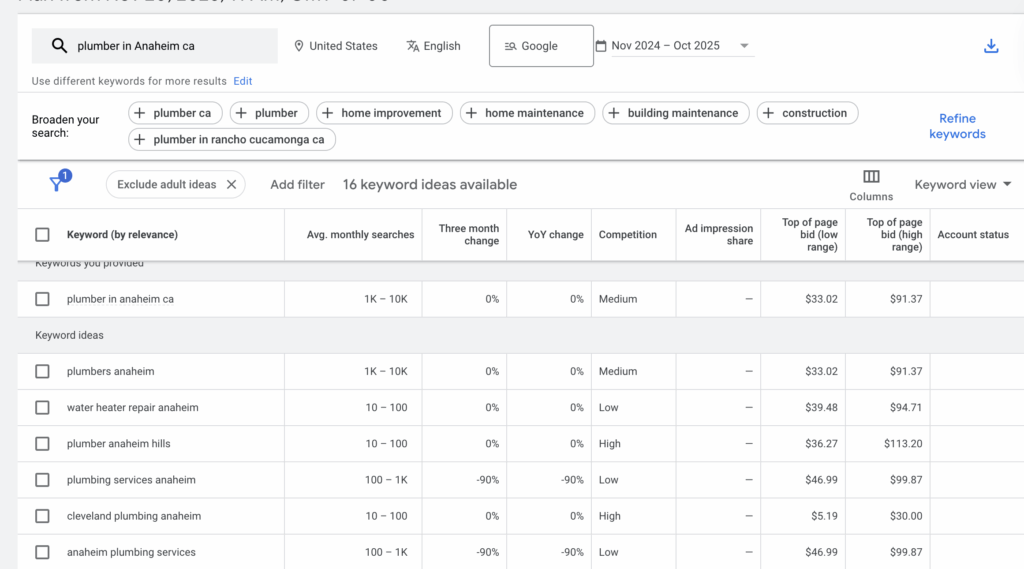
Enter seed keywords such as plumber, AC repair or landscaping.
Select Your Specific Location
You can choose:
- a city
- a county
- a radius around your business location
This shows local search volume instead of national data.
Review Keyword Ideas
Look at:
- search volume
- related keywords
- keyword difficulty
- keyword modifiers
- explicit and implicit keywords
You may find keywords like:
- HVAC repair Phoenix
- furnace repair near me
- tree trimming Scottsdale
Add Terms to a Keyword List
Export or save the keywords you want to use for your pages.
Google Keyword Planner is accurate, simple and great for small businesses or anyone learning how to do keyword research for local business.
Free Tools for Local Keyword Research
You can find valuable keyword ideas without paying for a premium tool.
Google Search
Autocomplete suggestions show real search queries.
Google Maps
Use it to see what your local competitors rank for.
People Also Ask
Shows common questions people search.
Google Trends
Shows rising searches in your city or region.
Keyword Magic Tool
Free limited searches for related keywords and search volume.
These tools help you perform local keyword research without spending money and support smarter local SEO efforts.
How to Use Local Keywords on Your Website
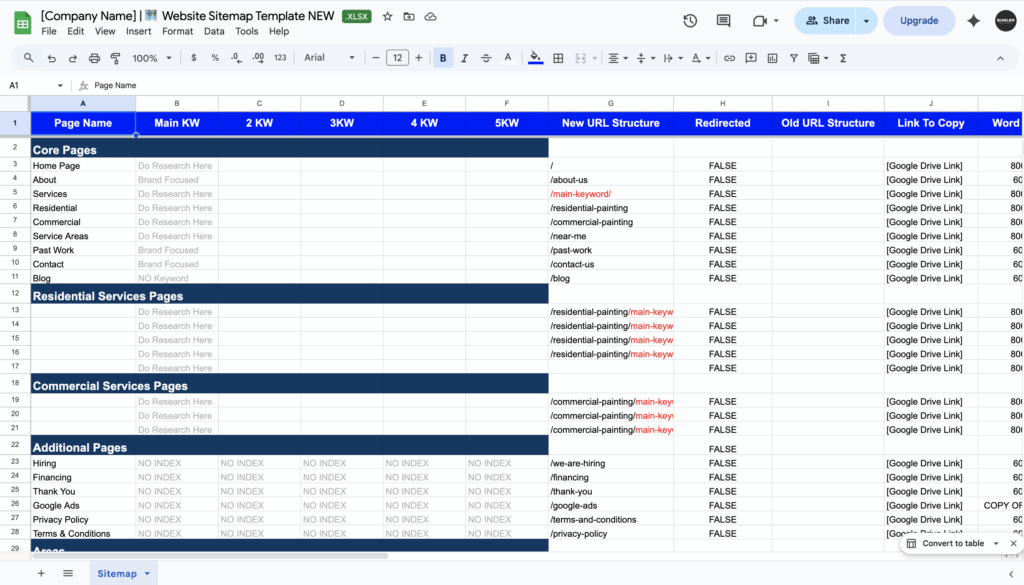
Finding local keywords is only half of the job. You also need to place them where search engines expect to see them.
Add Keywords to Page Titles and Headings
Use your primary keyword at the top of the page.
Example: Plumber in Mesa
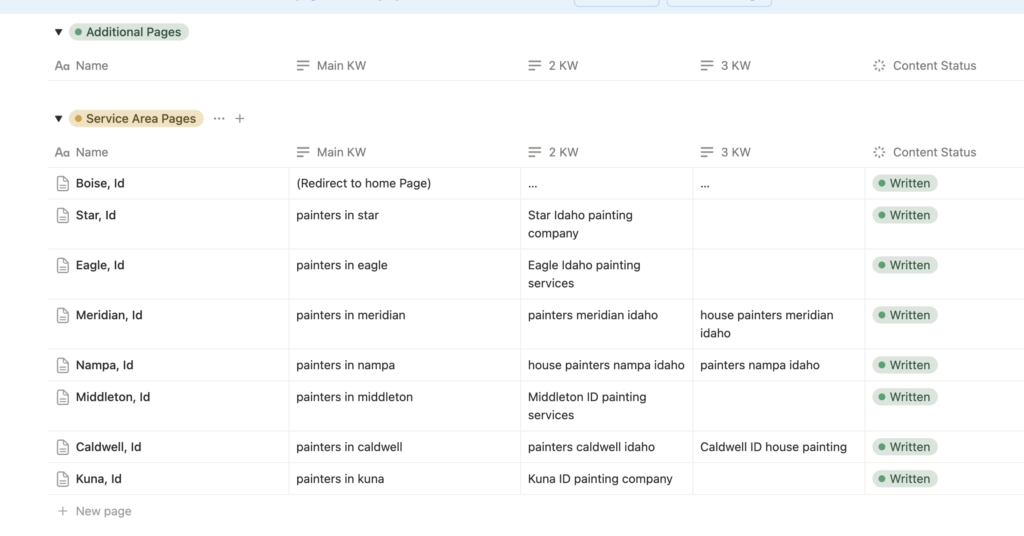
If you are creating multiple service pages or bulk location pages, one thing that saves a lot of time is pulling all your keywords at once and organizing them before you start writing. I like to use ChatGPT to help with this. First, download all keywords after pulling your sitemap here: [Demo Sitemap]
Once you have your list ready, you can use ChatGPT to generate clean, consistent meta titles and meta descriptions for every page. Here is the exact prompt you can paste into ChatGPT to get strong results:
Instructions for Writing Meta Titles:
Write a clear, unique, and concise meta title for each page that describes exactly what it’s about. Place the most important keyword or phrase at the beginning, followed by a benefit or unique selling point, and end with the brand name. Match the search intent, whether it is buy, learn or hire. Keep the core message within the first 55 to 60 characters to avoid truncation. Avoid keyword stuffing or repeating the same structure across multiple pages.
Instructions for Writing Meta Descriptions:
Create a unique, compelling meta description summary for each page that encourages clicks by clearly explaining the value it offers. Include details such as benefits, features, location or offers, written in natural language with relevant keywords. Aim for around 150 to 160 characters so it displays well in search results. Keep it truthful, engaging and aligned with the page content, and end with a subtle call to action when it makes sense.
Add Keywords Naturally Throughout Your Content
Use natural language so the page still reads smoothly.
Create Location Specific Service Pages
If you serve multiple locations, create pages for each one.
Example: Water Heater Repair in Tempe
Add Local Keywords to Your Google Business Profile
Use them in your:
- business description
- services
- posts
- products
- service area
Adding local keywords to your Google Business listing helps you optimize your Google Business presence and improve your local SEO performance.
Common Local Keyword Mistakes to Avoid
Many small business owners make these easy mistakes.
- Using the same keyword on every page.
- Stuffing too many keywords in one spot.
- Targeting keywords with no local search volume.
- Using the wrong city name or outdated location details.
- Ignoring implicit keywords and focusing only on explicit locations.
- Not checking how local competitors rank.
- Forgetting to update keywords when adding new services or multiple locations.
Avoiding these mistakes helps you build clean, effective keyword strategies that improve your search engine results pages.
Why Local Keywords Matter for Long Term Growth
Local keywords support the entire foundation of your local SEO. They help search engines connect your business to your local area, improve your visibility in organic search, boost your rankings in the local pack and help nearby customers find you faster.
Local keyword research strengthens:
- local traffic
- local rankings
- search queries
- voice search visibility
- keyword rankings
- overall local SEO performance
Better keywords lead to real results and more targeted traffic from people searching for your services.
How Buhler Brand Builders Helps You Choose the Right Local Keywords
Local keyword research can get complicated fast. Many service based businesses want help understanding search behavior, identifying keywords and creating content that brings in real customers. That is where Buhler Brand Builders steps in.
We help you:
- Find relevant keywords based on real search behavior
- Build keyword strategies for your service area
- Perform local keyword research using the best tools
- Choose keywords your competitors miss
- Add local keywords to your Google Business Profile
- Track keyword performance and improve results over time
We make keyword research clear, simple and effective so your business can grow with confidence. When you want support that feels honest, direct and easy to understand, we are ready to help.